Thursday, 2 October 2025

The loss of a dear friend


The loss of a dear friend

On Sunday 28th September 2025 I lost a dear friend: the artist Charles Hardaker. I was sixteen in 1949 and Charles a little younger, when we met at the Birmingham College of Arts and Crafts. We enjoyed competing together; he was my example, as we roamed the streets of our heavily bombed city, always with sketch-books at hand. Charles later settled in London at the Royal College of Art and soon became a well-known, hardworking painter. His works (mainly oils) were widely exhibited. The freedom of his paint textures is a joy in itself. Wherever you look, there is always something fascinating happening.


It is said that Charles aimed to show something of the wonder and mystery of the so-called ordinary world. He was influenced by the way Giorgio Morandi could arrange pots and pans to suggest a "conversation". Charles' still life paintings were a comment on groups or relationships.


A spiritual man, yet with a twinkle in his eye, Charles invited us into his inner world, through the many paintings of his modest studio hallway. Everyone wanted to know what the letters on the doormat were. Charles later drew our gaze outside with the light coming though the half-open door. He was looking for open doorways, leading to light, symbolic for him of "the other side". After all these years, Charles has now found it. Rest in peace, my dear friend.


   __________________________________________________________________________


Thursday, 14 November 2024

Songs of Changing Colours


Songs of changing colours

In these times of many-coloured conflict, I felt the need to share with you the joys of multi-coloured floating watercolours that complement each other. They merge, jump, wave, chat, dance, wink, producing emotional harmonies, songs. These colours are medicine for the soul. Get carried away! Sing with me!

watercolour on paper, 68 x 46 cm, 2024.
_________________________________________________
You can get in touch with me at: normanperryman@gmail.com


Monday, 15 April 2024

The Passing of Time


The Passing of Time 

Each year, as we gaze on the beauty of falling cherry-blossoms (a ritual in Japan), we are intensely aware that, when they are all fallen, like a movie, or a concert, there's nothing left - only memories.

I love the beauty of the short Japanese haiku poem. An art form reduced to essentials, it suggests movement and the passing of time, so we find ourselves reflecting on life.

                                               Old pond

                                           a frog jumps in

                                             the sound of water

                                                              (Basho 1644-1694) 

   Yes, at 90, life seems to be passing by faster than it used to be and I'm reflecting a lot about this. But rather than dwelling on regrets, I'm inspired to use my remaining time to celebrate the beauty of the transient. I plan to create a series of short liquid kinetic images (perhaps based on music) in which clouds of colour float across my projection screen, then like nature, change or disappear. My little rivers of colour will become an ode to nature and my creative way of waving goodbye.

I still treasure a collaboration in 2013 with the Netherlands Chamber Orchestra (leader Gordan Nikolić) and the composer/conductor Toshio Hosokawa. That work was called Cloud & Light, for shō and orchestra. The celebrated soloist Mayumi Miyata, clad in white, sat in front of the projection of my floating moons or planets that changed colours, according to the tones she played. 
There was no video-recording so this was a unique emotional experience for us all. Only the memory remains. An exercise in mindfulness and acceptation.
____________________________________________

 Many thanks to all you thousands of readers who have followed this blog since 2012. You can still find each one in the search bar on the lower right.

The Buddhist master of Mindfulness Thich Nhat Hahn, believed that the energy that we have shared will take on different forms, like changing clouds. My images have no digital limitations. They are forever universally available as part of the Cosmos. Who knows, you might also find some of them in the Cloud (YouTube?). _________________________________________________


Tuesday, 20 February 2024

The joys of intelligent listening


The joys of intelligent listening

On January 18th 2018, a devastating storm brought the whole of the Netherlands to a standstill. I happened to be one of many in my dentist's waiting-room. Conversations about the weather and more sprung up. A woman sitting next to me asked "And what is your work? "Oh, I'm an artist - I paint music." "Huh...? Wait a minute, you mean you've memorised the score and paint in synch with..... I'm a neurologist - how can your brain do all that in real time?" "Well, Doctor, my brain has been practising painting "movies" with a paintbrush for fifty years...It's a long story." That encounter in our dentist's waiting-room led to years of delightful discussion.
                                
Dr. Maaike van der Graaff, Neurologist, watercolour, 68 x 50 cm. 2019

A lot of people pretend to be listening, but they don't hear you because they are already preparing their reply. Yet if you can discover a common understanding, listening can be sheer joy.  When you give and take, it's like playing music together, it can be deeply moving and memorable. Musicians actually practise listening to each other. If only politicians could learn from their example!

Doctors who are good listeners show an intelligent interest in the whole person. "Tell me - how are you?" It's an invitation to share a lot more than just physical complaints. 

"Oh doctor, what a relief; you really hear what I'm saying. And I feel seen and encouraged by your wise smile of understanding. I know my time is nearly up, but I could give you a hug. Your words are music to my ears!"
___________________________________________________


Wednesday, 8 November 2023

The Wound-Dresser


The Wound-Dresser
by Walt Whitman & John Adams

How can any artist find a way to visualise the indescribable tragedies of the present wars of destruction, suffering and death? I turn for help to the great American poet Walt Whitman (1819-1892), who during the extremely bloody American Civil War (1861-1865), volunteered to work in hospitals to care for the wounded, nurse them and comfort them as they were dying. His experience inspired his famous poem The Wound-Dresser. These notes are in honour of all those anonymous heroes and heroines who today are working themselves to death as "wound-dressers", in the most traumatic circumstances.
"Bearing the bandages, water and sponge,
Strait and swift to my wounded I go, 
There they lie on the ground after the battle brought in,
Where their priceless blood reddens the grass, the ground,
Or to the rows of the hospital tent, or under the roof'd hospital,
To the long rows of cots up and down each side I return, 
to each and all one after another I draw near, not one do I miss....."

In 1989 the composer John Adams set this poem to 19 minutes of haunting music for chamber orchestra and baritone. In 2010 I painted continuous fluid images, projected large on-screen, for two deeply moving performances in The Netherlands with the baritone David Wilson-Johnson and Holland Symfonia, conducted by Otto Tausk. My kinetic images were never recorded on video.
 
"An attendant follows holding a tray, he carries a refuse pail,
Soon to be fill'd with clotted rags and blood, emptied, and filled again....
I onward go, I stop,
With hinged knees and steady hands to dress the wounds,
I am firm with each, the pangs are sharp but unavoidable,
One turns to me his appealing eyes - 
poor boy! I never knew you.
Yet I think I could not refuse this moment to die for you, if that would save you."

"Come sweet death! Be persuaded
O beautiful death! In mercy, come quickly."
___________________________________________________________________

The above link to John Adams includes some very perceptive, thought-provoking comments by the musician Sarah Cahill. Thank you Sarah.


I

Sunday, 25 June 2023

At ninety, I must thank you all...


At ninety, I must thank you all
 for sharing years of creative inspiration

Dear friends, I'm indebted to so many of you, but my story should begin with the heroic Mrs. Cave, the only teacher in my tiny village school in Worcestershire. She recognised my drawing talents as a young boy and allowed me to fill the blackboard at lunch-time, while others scrambled around in the playground. Those were my first exhibitions - ha ha! Little did I know what an extraordinary role drawing and painting would play in my life.

By sixteen I was at Birmingham art college, happily competing with Charles Hardaker (a year younger). We shared keen powers of observational and technical skills and the joy of hard work. Charles became my friend and inspiration.
In 1957 I had moved to the Netherlands and became indebted to Professor Hammacher of the Kröller-Müller Museum when he offered me the use of a house and studio in the Vaucluse for a whole year. Nature and landscapes became a huge source of energy and inspiration and still are. I'm so thankful for that.
On my way home through Switzerland in 1963 I met Yehudi Menuhin at his Gstaad Festival and we became dear friends. He was the greatest inspiration of my life and opened the doors to collaborations with many other musicians. What a year that was!
                          Hand in hand with Yehudi Menuhin for a long chat (1991)
 
A talk with Simon Rattle for BBC Television (1993)

In the seventies, the creation of fluid kinetic paintings in synch with the music became my passion, with my partner the cellist Vivian King, conductors Clive Fairbairn, Sir Simon Rattle, Mirga Gražinytė-Tyla, pianists Louis van Dijk, Pierre-Laurent Aimard and Sebastian Knauer, violinists Daniel Hope, Lis Perry, Gordan Nikolić, the tenor José Carreras, baritone Benno Schollum, Johannes Pfeuffer and the Ebonit Saxophone Quartet, Michael de Roo and Circle Percussion Ensemble and the Trio Min/Wu/Xu. I'm amazed that I was privileged to work with such fine musicians!

Audio-visual creativity became my daily nourishment, as I learned to memorise the music of composers John Adams, George Benjamin, Toshio Hosokawa, Tristan Murail, Augusta Read Thomas and Huang Ruo. Not to mention those no longer with us: Vivaldi, Haydn, Mussorgsky, Scriabin, Saint-Saëns, M.K.Čiurlionis, Elgar, Ravel, Stravinsky, Walton, Kabelać, Takemitsu and Rautavaara. I thank them all for the opportunity to visualise their great music. 
Rehearsing for "The Sea" by M.K.Čiurlionis (2019)

As well as hundreds of portraits of "ordinary people" I've been privileged to paint portraits of great musicians in action, in such a way that their gestures help you to "hear" the music. We often became friends and I was so touched by their messages of appreciation, either personally or by phone, from Simon Rattle, Jessye Norman, José Carreras, Plácido Domingo, Bryn TerfelKurt Masur, Carlo-Maria Giulini, Cecilia Bartoli, Bernard Haitink, Vladimir Ashkenazy,  Mstislav Rostropovich and Yehudi Menuhin. (Yehudi's voice is still on my answering machine, now on YouTube). Every year I feel so sad that yet another of my dear portrait subjects has passed.
Mstislav Rostropovich (watercolour 1991(85 x 56 cm) 


I still treasure other inspiring friendships that have developed over the years: the art critic and author Eric Gibson, filmmaker Erik Friedl, author Jessica Duchen whose work is saturated with music, art educator and painter Herb Holzinger, Professor Cees Hamelink (an ardent collector of my paintings) and pianist Jean-Louis van Dam, choreographer Jiri Kylián and Jonathan Fulford, who directed the major BBC 1993 documentary Concerto for Paintbrush and Orchestra. My special thanks to Andrew Jowett of Symphony Hall for commissioning no less than thirty paintings of celebrated performers. I'm also grateful to the visionary managers or agents in the world of music who engaged me to perform worldwide: the Royal Concertgebouw Orchestra, the City of Birmingham Symphony Orchestra, the Rotterdam Philharmonic, the Netherlands Philharmonic, the Sejong Soloists, the Zurich Chamber Orchestra, the Daniel Hope Ensemble and more. 
Painting to Jura (The Sea) in Birmingham Symphony Hall, with Mirga Gražinytė-Tyla and the CBSO. My very last performance on February 16th, 2019). It was quite emotional.

Thank you all so much! It's been a real roller coaster. My sons Chris and Alex were so often the ones who steadied my nerves and still do. At ninety, there are so many stories I could tell you. Actually I have - thousands read my blogs (190 so far): A Life Painting Music. I may have disappeared from the performing arts scene, but I'm still quietly at work in my Amsterdam studio. As long as I can hold a brush I'm happy to explore many other creative possibilities. 
Why not email me at normanperryman@gmail.com. Yes, there are still watercolours and limited edition fine-art prints for sale for a "prix d'amitié".

You can Google me or play examples of my fluid kinetic paintings on YouTube
Of all my paintings, this one seems to be a favourite. A group of teenagers was once hanging around the foyer of Birmingham Symphony Hall, rather shy. One of them eventually approached me and said: "Sir, I just have to tell you: that painting changed my life. I now love classical music". Every time I think of his words, I give him a virtual hug. This is why we paint.

Here's the link:
____________________________________________


Wednesday, 1 February 2023

Fun with Zodiac Signs, Colour and Music


Fun with Zodiac Signs, Colour and Music


In 1986 Rupert van Woerkom, the very creative Editor of the Dutch women's magazine Elegance, commissioned me to make twelve paintings (approx. 60 x 50 cm.) inspired by the Zodiac Sign of each month. That was a very good year! I decided to use watercolour and oil crayons on paper and to scribble in some characteristics of women I knew, with their Sign. How did they behave, what colours belonged to their personalities? Which music did they like and how would that influence my choice of colours and design? I found it all great fun - the female readers lapped it up, bought most of the paintings or commissioned more. Of course if you male sceptics find this nonsense, don't bother to read on. 
Here they are:
Aries: March 21-April 19
Bach. Anything he can do, she can do better; action woman; temperamental; independent. The planet Mars. 

Taurus: April 20-May 20
Tower of strength. Nature lover. Don't rush me. 
Aimez-vous Brahms? Sensual. Déjeuner sur l'herbe.

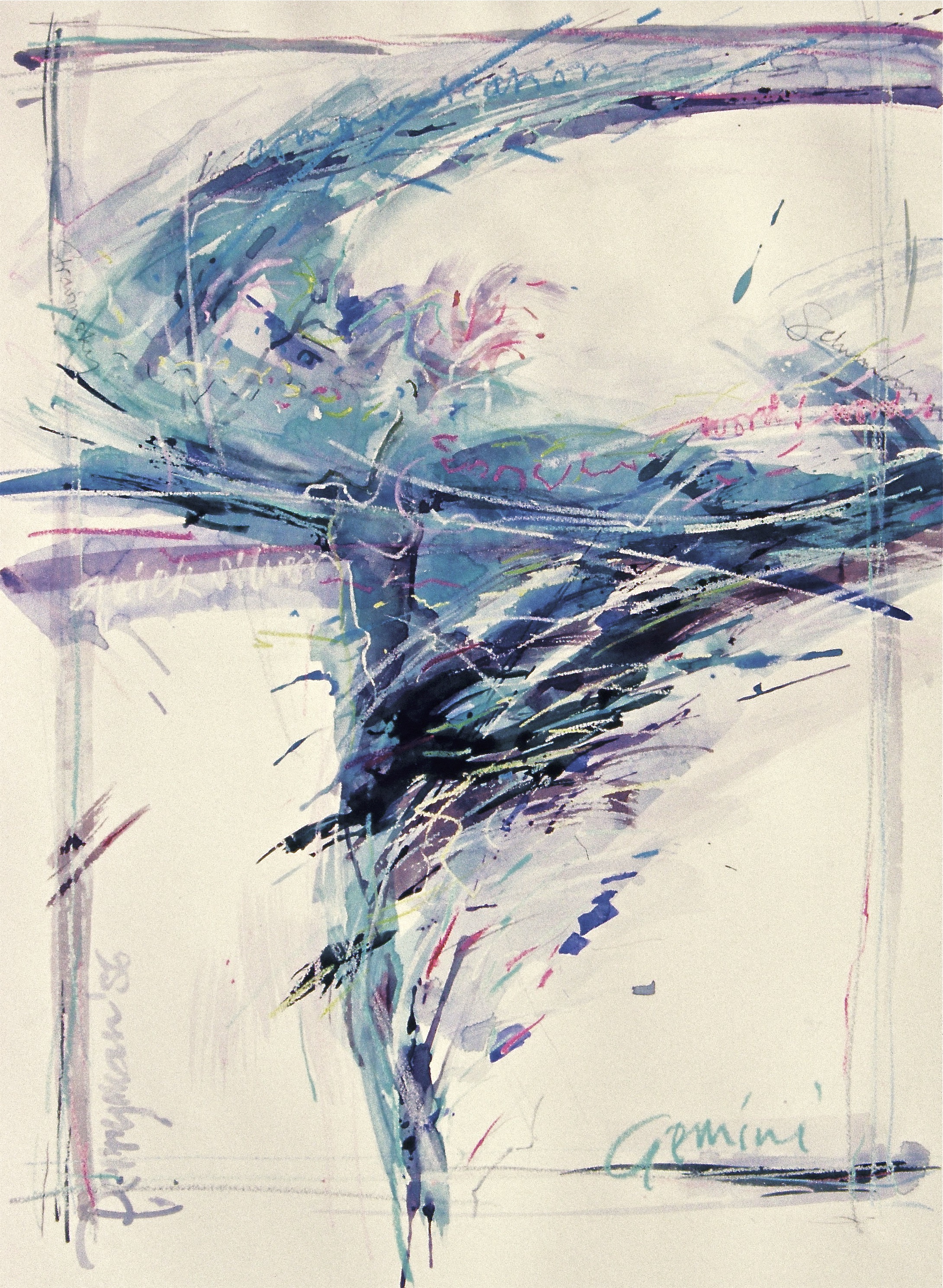
Gemini: May 21-June 20
Words, words; quicksilver; communication; looking both ways at once. 
Schumann. Stravinsky.

Cancer: June 21-July 22
Claire de Lune; Home sweet home; Money, money, money; Nocturne; Debussy or Dvorák?

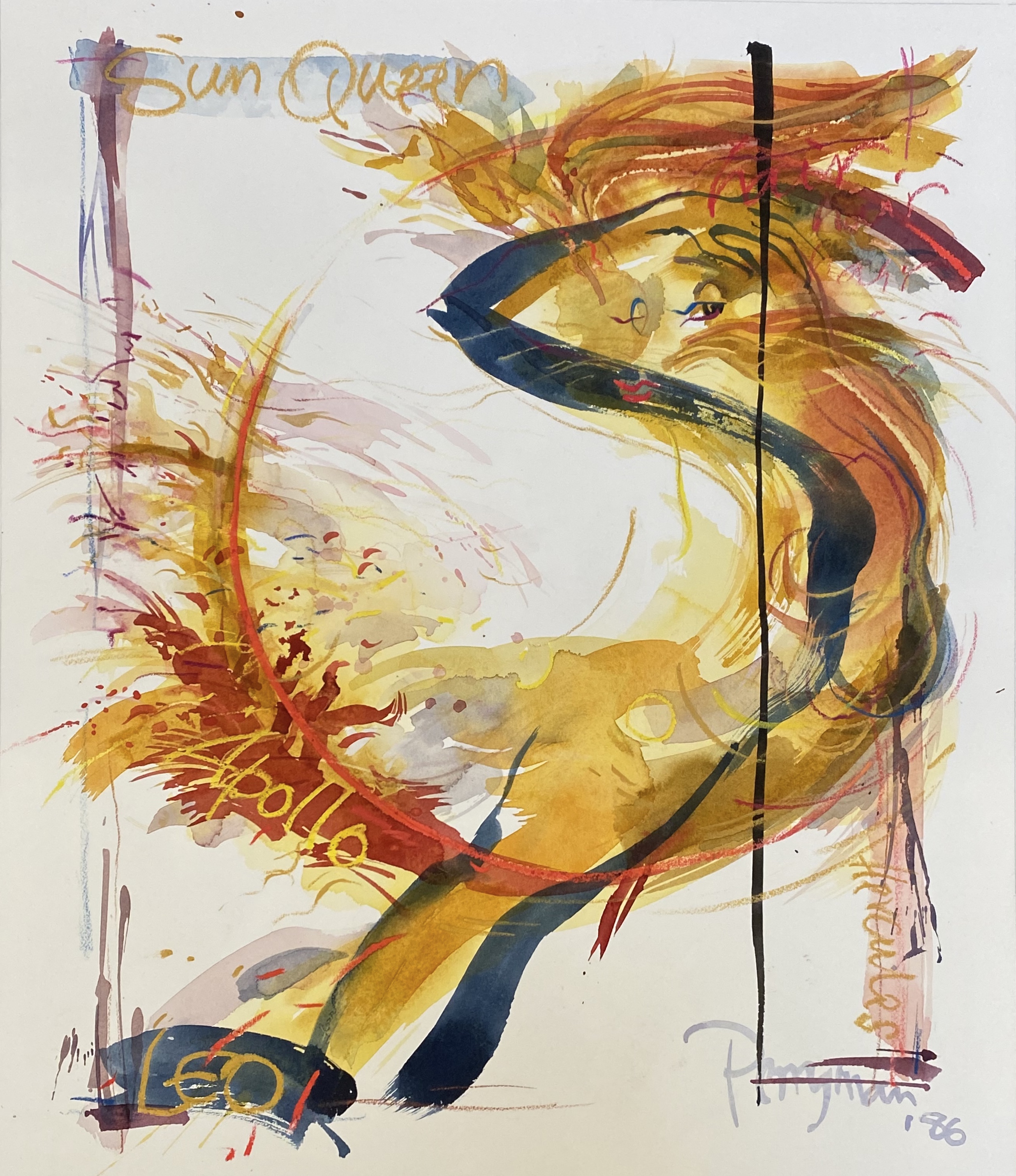
Leo: July 23-August 22
Sun Queen, Apollo, Hercules, Hair, hair, hair
Madonna?
                    Note: this one is still for sale. 59 x 51 cm.


Virgo: August 23-September 22.
Cool, cool; You got a problem? Intelligence service;
 Spic and span; Impeccable; Dvorák?


Libra: Sept. 23-October 22.
Decisions, decisions; Up and down; common sense; 
charmer; Saint-Saëns, maybe?
Note: this one is still for sale. 60 x 47 cm.

Scorpio: October 23 - November 21
Pluto; complete control; passionate; hypnotic; loyalty;
Tchaikovsky; Paganini.
Note: this one is still for sale. 64 x 52 cm.

Saggitarius: November 22 - December 21.
The sky's the limit; applause please; where did I put my keys? Painfully honest; Jupiter; Berlioz; Beethoven.

Capricorn: December 22 - January 19; 
Queen of the winter; Saturn; control: quiet social climber; artistic; hidden feelings.
Scriabin?


Aquarius: January 20 - February 18
Quick thinking; so many friends; intuitive; gone with the wind; marry - are you crazy? Mendelssohn, Mozart.
 
Pisces: February 19 - March 20
Oh, am I late? Elusive; enigmatic; sense of humour; 
Neptune; Chopin.

__________________________________________________________________
Contact: normanperryman@gmail.com


Friday, 20 January 2023

Dancing rhythms in landscape


Dancing rhythms in landscape


Now winter is upon us, how many of us are old enough to remember the winter of 1962/63? It went down in history as the coldest European winter of the twentieth century. I was twenty-nine and crazy enough to stand outside in the snow sketching the Dutch landscape! Pale landscapes assisted me in my search for lines or groups of people, trees, buildings or windmills that would form dark shapes to dance across my canvas. I wanted to emphasise those shapes, bundled up, twisting and turning in space, balancing strategically in the composition as it were on a rope stretched from side to side. They revived memories of my hobby as an art-student, balancing on a slack-rope, relishing the space all around me. 
 
The windmills of a frozen Zaandijk in the winter of 1962, 
oil on canvas, approx. 80 x 60 cm.

When I moved to Switzerland a few years later, my fascination with the arrangement of forms in space continued. As I look back at these early works, I still hear the musical rhythms and tempi of these seemingly kinetic forms, forceful sounds fading to a whisper on the horizon or escaping off the canvas. The clatter of skis being put on, skiers climbing sideways with staccato edges in the snow, then rhythmic rasping sounds, fading away as they disappeared quietly over the edge of the mountain. Every skier knows those sounds.

Skiers, oil on canvas, approx. 80 x 60 cm.1966. 
 
Below, my woodcutters in the snow were making modern music like percussionists, with the sounds of irregular chopping and sawing, with two very quiet final notes provided by a couple of tourists, standing still, perhaps hypnotised.

Woodcutters in the snow, Blatten, near Zermatt, Switzerland,1963.

Below, the quiet adagio of a Jeu de Boules in Carpentras, Provence - minimal music, with only the rustle of plane trees, the crunch of gravel, murmured commentaries and occasionally a sudden clack! No snow here - I've faded out the background to focus on the elongated dark shape of the group, something that became characteristic of my early works.

Jeu de  Boules in Provence, oil on canvas, approx. 80 x 60 cm.1963.

But, you might ask, where is colour in this young artist's life? It was playing a waiting game, perhaps hidden by an inner struggle, inhibited by an unhappy relationship. It was waiting to explode (and it did), impelled by the inspiration of music and the realisation, long ago, that painting and music were meant to be partners in my life. Here's a link to that early blog from 2012: 
_________________________________________________
(This is an edited version of an earlier blog) 


Thursday, 24 November 2022

Ageing optimistically, like Hokusai


"When I'm a hundred and forty or more, 
every stroke I paint will be alive..."

(The great Hokusai)

As I ponder old-age and the remaining creative time I may very well have, I am greatly encouraged by the words of the famous Japanese artist and printmaker Hokusai (1760-1849) : “From the age of six, I had the habit of sketching from life. I became an artist…and from fifty on began producing works that won some reputation, but nothing I did before the age of seventy was worthy of attention...If I go on trying...at one hundred and forty or more...I will have reached the stage where every dot and every stroke I paint will be alive". Wow, what an example!


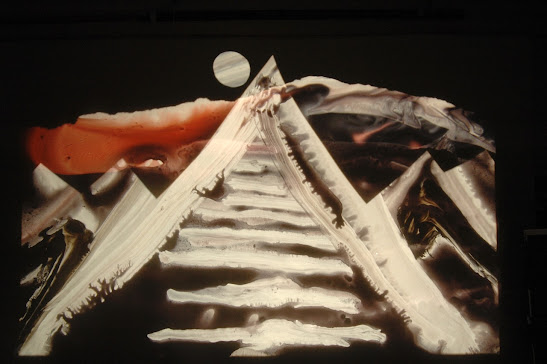
This woodblock print (26 x 38 cm.,1830) The Great Wave off Kangawa is Hokusai's best-known work and the first in his series Thirty-six Views of Mount Fuji. He was then already seventy and this iconic work soon became probably the most reproduced image in the history of art. 

While Mount Fuji is calmly placed asymmetrically in the distance, the fishing-boats might appear to be waging a losing battle against the claws of those huge ominous waves. Or are they successfully cleaving their way through the irresistible forces of nature? It's an endless discussion.

Facilitated by Dutch traders, Japanese prints and design flooded Europe, the movement entitled Japonisme inspired artists like Van Gogh, Monet (the Giverny Garden) and composers like Debussy (La Mer), Čiurlionis (The Sea) and many others. The coloured outlines of shapes in Van Gogh's paintings were probably influenced by the characteristics of woodblock prints. My own fluid watercolours were certainly influenced by Japanese art, especially since I travelled there in 1984. So it was so natural that I should be asked to paint live kinetic images to the music of Toshio Hosokawa with the Netherlands Chamber Orchestra: "Meditation for the victims of the Tsunami 11/3/11". 

What would Hokusai have made of one of the most traumatic struggles against the sea in Japanese history? My earlier blog 
Tsunami 11/3/11 sketches the story of the earthquake that split the ocean floor near Fukushima in 2011, resulting in about 20,000 deaths, 450,000 homeless and appalling destruction. My two calligraphic gashes are inspired by a shriek from the strings, then all carefully organised Japanese harmony can be seen slowly disintegrating into a floating chaos. We have all seen those awful videos, but I wanted to create slow-motion images, projected large and designed to spread across the towards  the spectators, trapped in their seats in the concert-hall, so that the horrors of the experience could sink in.

I visualised the very soft final part of the music (Entitled Prayer) in a symbolic rendering of the everlasting Mount Fuji, superimposed over my powerful Japanese brush, now barely moving, as my drops of water breathed their last and disappeared.

This was one of many treasured multi-cultural collaborations with musicians and dancers that have come my way in the last fifty years, many recorded for television. The intense productions and creative thrills involved in painting live with music was the great passion of my life. But at my age it is now longer possible. You can find examples on YouTube, still images on my website and on other blogs.
   
A brief encounter in space, watercolour 20 x 30 cm. 2019

The transparency and fluidity of watercolour is still my great love, but I must now create watercolours on paper, painted quietly, without pressure, in the studio. There will undoubtedly be some Japanese influence. "Less is more" has become my aim. I have all the time in the world.
_________________________________________________